

Biology of Biodigesters – A World and an Opportunity
10/01/2025
The Role of Biotechnological Additives in Biogas Production
07/02/2025
The European Green Deal is a comprehensive strategy promoted by the European Union to address the climate and environmental crisis. The main objective of this initiative is to make Europe the first climate-neutral continent by 2050 by progressively reducing greenhouse gas emissions, protecting biodiversity, and promoting sustainable production practices. This green transition involves key sectors such as industry, energy, construction, transportation, and, of course, agriculture and livestock.
In the context of this plan, the agricultural and livestock sectors play a central role, as they significantly contribute to greenhouse gas emissions and soil and water pollution. Paneco Ambiente, a leading player in the field of sustainability, provides innovative and environmentally friendly solutions to support the livestock sector in tackling these challenges.
What the European Green Deal Entails
The European Green Deal is structured into several lines of action, each aimed at reducing the environmental impact of various economic sectors and promoting the efficient use of natural resources. The main objectives include:
- Achieving climate neutrality by 2050. - Reducing net greenhouse gas emissions by at least 55% by 2030. - Improving air and water quality by reducing pollution. - Promoting a circular economy and reducing waste. - Supporting more sustainable agricultural practices by reducing the use of pesticides and chemical fertilizers.
Through these measures, the EU aims to make the entire production system more sustainable—from manufacturing to goods transportation and food production. The Green Deal thus represents an opportunity for transformation and innovation for all industries, including the livestock sector, which has a significant impact on emissions and resource use.
The Livestock Sector and the European Green Deal
The livestock sector significantly contributes to the emissions of methane and ammonia—two gases that have a strong impact on both the climate and air quality. Intensive livestock farms, in particular, produce large quantities of organic effluents that can contaminate soil and water if not properly managed.
In response to these issues, the Green Deal encourages farmers to adopt more sustainable practices, such as:
• Improving the management of effluents and organic waste.
• Reducing emissions through advanced ventilation systems and the use of feed additives.
• Implementing solutions to reduce bioaerosols and ammoniacal compounds.
Management of Slurries and Covering of Manure tanks
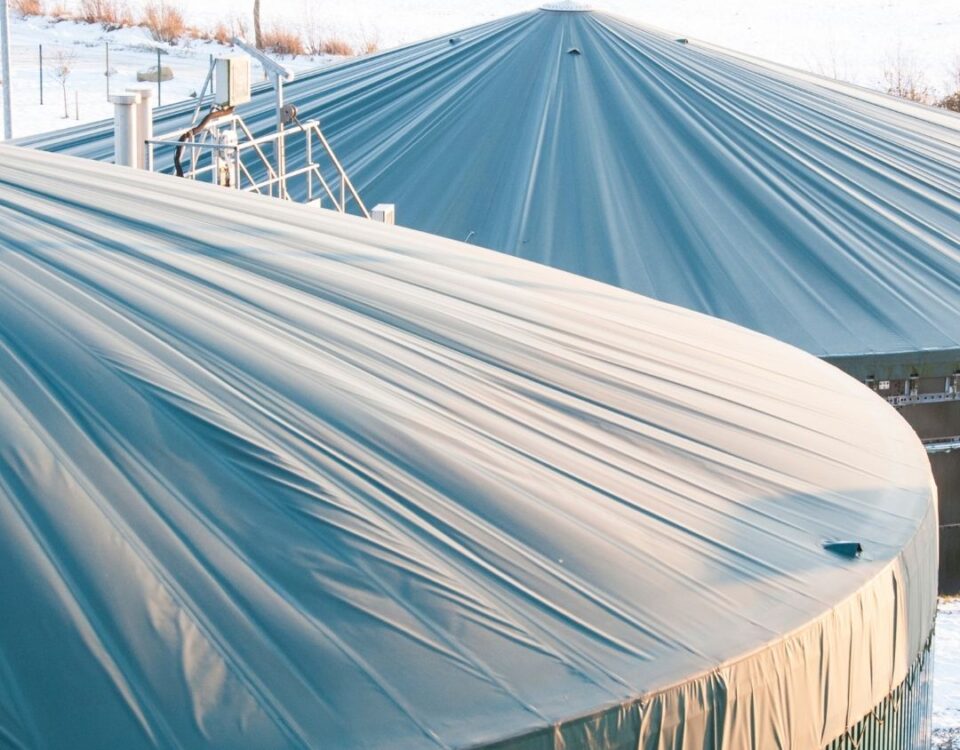
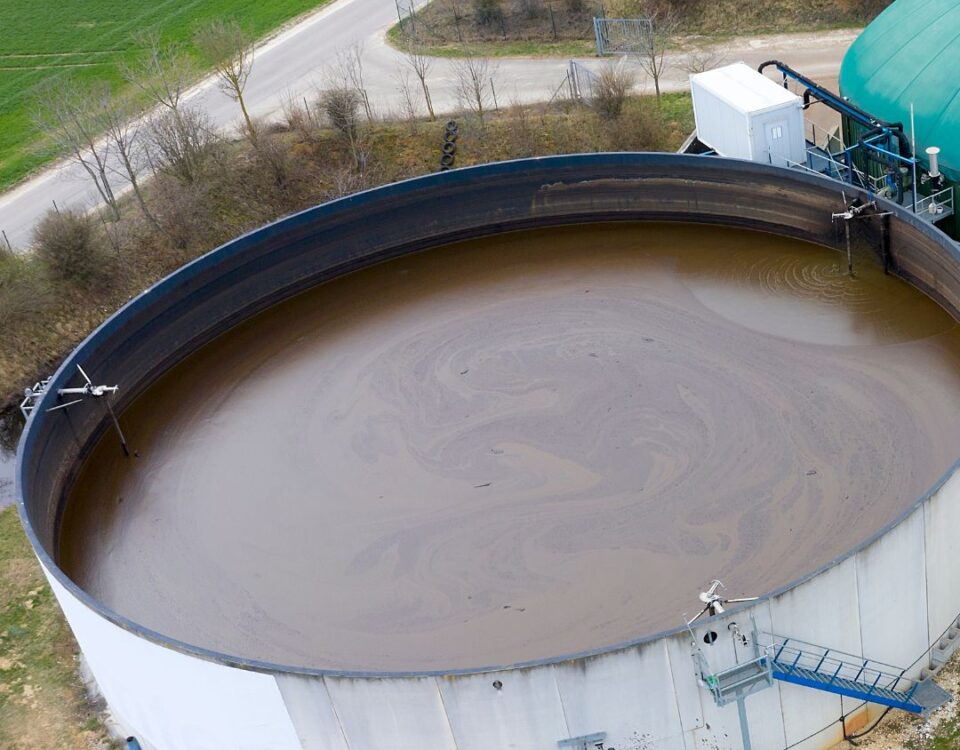
One of the main challenges in managing livestock effluents is containing the slurry produced by animals, which is often stored in open lagoons. Closing these storage basins is a practice aimed at preventing odour dispersion and reducing environmental impact; however, due to the high costs involved, it is not widely adopted. More sustainable and practical alternatives include using the OENS Fixed system to cover the entire area with the action of odour-neutralizing additives or directly addressing the source with the EnzyVeba NK Zoo additive, which is applied directly to the slurry to prevent the emission of odorous gases.
Additionally, covering manure heaps is another practice that can limit the spread of odors and the evaporation of volatile substances, but this approach is often not operationally feasible. By using the OENS Fixed system, however, the gases produced by manure heaps are trapped, reducing environmental impact and promoting a more sustainable recovery.
These initiatives require investments and the support of specialized companies. At Paneco Ambiente, we offer innovative solutions for the treatment of effluents and for reducing the environmental impact of livestock operations. These solutions are essential for helping livestock companies comply with European regulations and reduce their ecological footprint.

Paneco Ambiente Solutions for Sustainable Livestock Farming
Paneco Ambiente provides specific products and additives for the livestock sector to address sustainability challenges. Here are some of the most relevant solutions to help farms reduce their environmental impact and improve production sustainability:
Management of Livestock Effluents
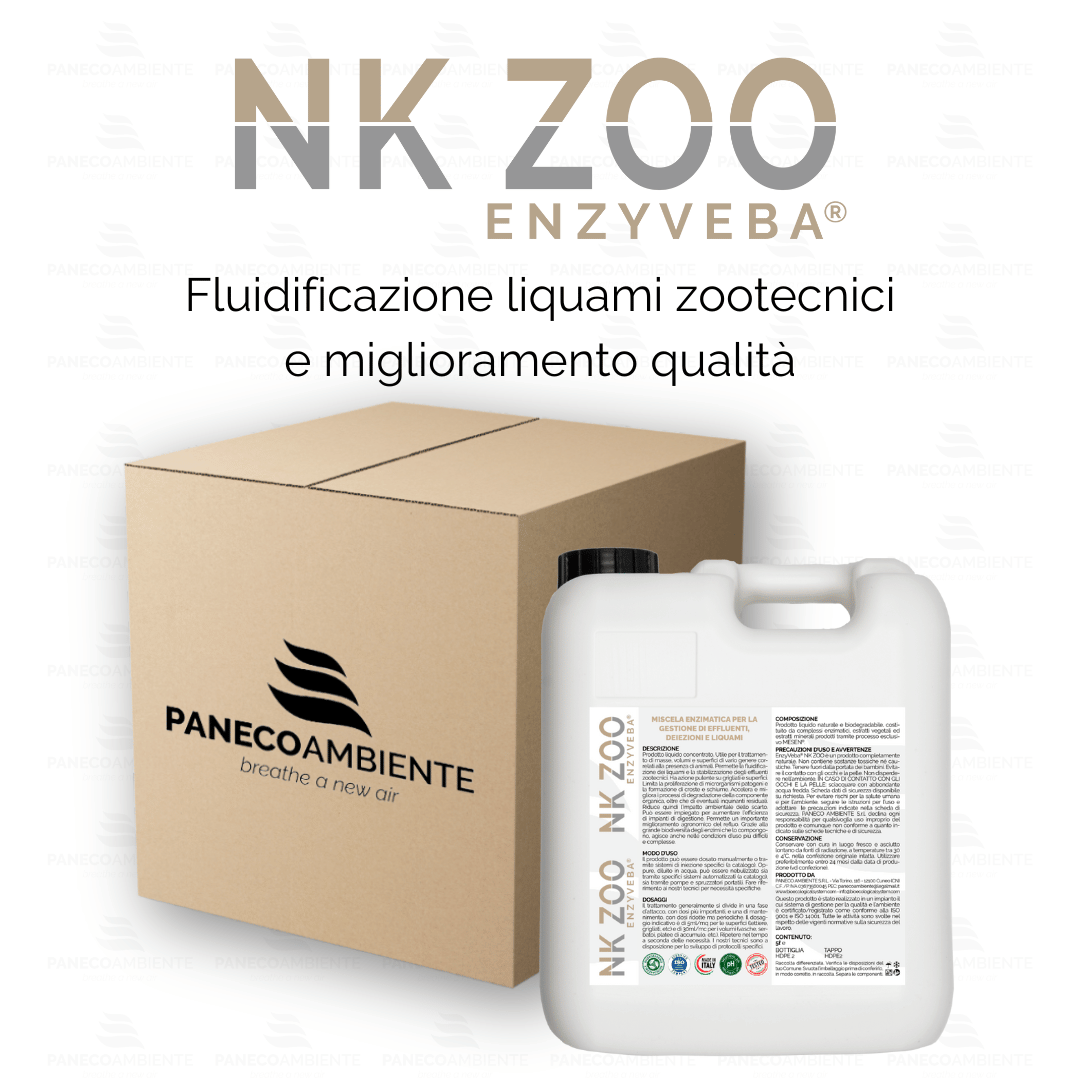
Managing effluents is one of the critical aspects for intensive livestock operations, as untreated organic effluents can contaminate water and soil. Paneco Ambiente offers solutions for treating livestock effluents, such as EnzyVeba® NK ZOO. This product helps companies align with the Green Deal guidelines and contribute to a circular economy.
Reduction of Ammonia Emissions
Ammonia emissions from livestock farms represent a challenge for air quality and public health. Paneco Ambiente’s products for reducing ammonia help improve air quality for both animals and people, in line with the Green Deal’s zero-pollution goals. These products help to lower or even neutralise the emissions, ensuring compliance with environmental regulations.
Control of Bioaerosols
Bioaerosols, which contain microorganisms and other particles, can spread within farms, posing a risk to the health of both animals and workers. Paneco Ambiente offers solutions for controlling bioaerosols, reducing the spread of pathogens and contributing to a safer environment in livestock facilities. This aspect is crucial for meeting the Green Deal’s standards for animal health and welfare.
-
NaturVeba RC ZOO
Riduci ammoniaca e bioareosol nei tuoi allevamenti (Azione sull’effetto)
-
EnzyVeba KR ZOO
Abbatti a 360° ammoniaca e bioareosol nei tuoi allevamenti (Azione causa-effetto)
-
EnzyVeba NK ZOO
Fluidifica i liquami evitando la formazione di croste e cappellacci


Animal Welfare
Animal welfare is a priority of the Green Deal, which promotes high standards for the care and health of animals. Paneco Ambiente offers natural products that improve the quality of life for animals by reducing stress and contributing to a more comfortable environment in farms. These solutions meet the demands of consumers who are increasingly attentive to animal welfare and comply with European directives.
OENS® Fixed Nebulization System
The OENS® FIXED system represents an advanced solution for neutralizing ammonia and bioaerosols in livestock operations, designed to ensure efficiency, practicality, and sustainability. The technology is equipped with a control unit featuring a PLC and automated management software that can be monitored via touchscreen, providing precise and centralized control of operations.
The OENS® FIXED nebulization system, is specifically designed to diffuse Paneco Ambiente’s neutralizing products—such as EnzyVeba® KR Zoo and NaturVeba® RC Zoo—, with a modular and flexible approach to treat areas. The fogging stations are extremely efficient, with coverage extending up to 10–12 meters and a nebulization angle of 110°, ensuring uniform application even in large spaces.
One of the main advantages of the system is its ease of installation, which reduces the time and costs of implementation compared to other solutions. Furthermore, it requires minimal maintenance thanks to the robustness of its materials and advanced design, which increases its reliability over time. The low operating costs represent an additional benefit, making OENS® FIXED an ideal choice for those seeking an effective and sustainable alternative.
Available both for sale and for rent, the system offers maximum flexibility and customization, adapting to the specific needs of each farm. By improving air quality, it helps optimize livestock performance and enhance animal welfare, creating a healthier and more productive environment.
Conclusion
The European Green Deal represents a turning point towards a more sustainable and environmentally friendly future. Thanks to innovative solutions, we at Paneco Ambiente support companies in meeting the challenges of the Green Deal by providing tools for more sustainable production, reduced emissions, and improved animal welfare. Investing in these technologies not only helps companies to comply with regulations but also strengthens their competitiveness, creating a positive impact on both the environment and the European economy.