




The Costs of Low Quality Soil
04/04/2025
Unpleasant Odors: A Problem Beyond the Nose
23/05/2025
The Strategic Role of Liquid Humus in Soil Management
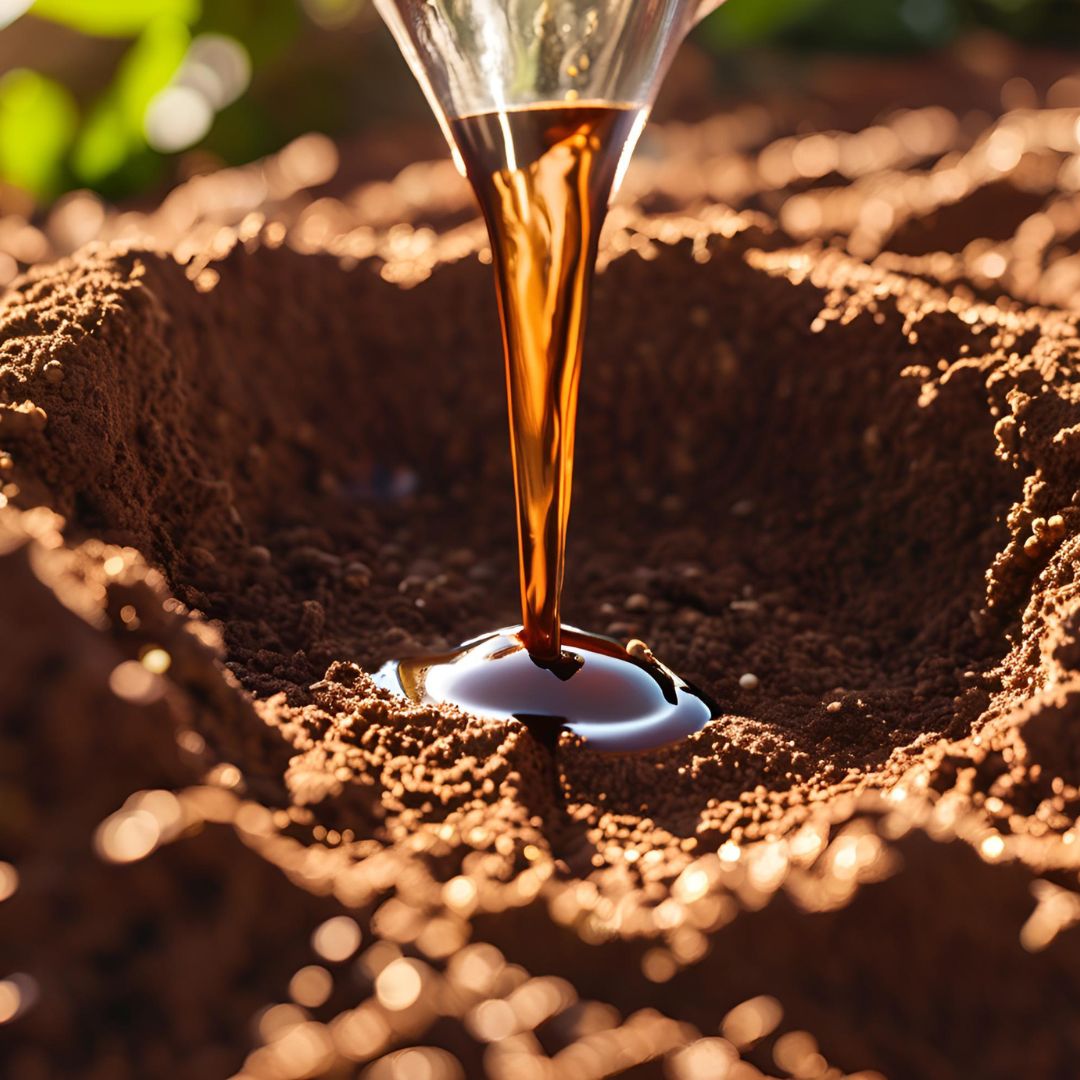
Soil health is fundamental to agricultural productivity and environmental sustainability. Advances in agronomic technology have elevated the importance of organic soil amendments that encourage biofertilization,particularly through enhancing microbial biodiversity and stimulating the rhizosphere. Liquid humus, with its unique biochemical and microbiological properties, is emerging as a leading solution for regenerating intensively farmed soils, restoring their vitality and ecological function.
In an era where reducing chemical fertilizer use and promoting organic farming practices are paramount, deploying humic extracts alongside targeted microbial inoculants,especially mycorrhizal fungi and rhizosphere bacteria,offers a winning strategy. Such an approach not only improves nutrient uptake, soil structure, and crop resilience, but also supports a sustainable agricultural future.
Physico-Chemical-Biological Properties of Liquid Humus
- Humic Composition and Chemical Properties
Liquid humus is characterized by humic and fulvic acids,complex organic molecules derived from decomposed organic matter. These compounds act as chelating agents, enhancing the solubility and availability of both micro- and macronutrients in the soil. Key humic properties include:
- Water Retention: By holding water in the soil’s micropores, humic substances reduce compaction and improve root access to oxygen.
- Nutrient Chelation: Humic acids facilitate the controlled release of nutrients such as nitrogen, phosphorus, and potassium, ensuring prolonged availability to plants.
- Soil Interaction: These molecules form organo-mineral complexes that strengthen soil structure and foster microbial colonization.
Microbial Inoculation: Mycorrhizal Fungi and Rhizosphere Bacteria
The true power of liquid humus lies in its embedded microbial inoculants, which establish symbiotic relationships with plants:
- Root Symbiosis: Mycorrhizal fungi attach to plant roots, expanding the absorptive surface area and enhancing the uptake of inorganic and organic nutrients,especially phosphorus,via an extensive hyphal network.
- Growth Promotion: Rhizosphere bacteria (e.g., PGPR,Plant Growth-Promoting Rhizobacteria) synthesize phytohormones like auxins and gibberellins, stimulating root development and overall plant growth.
- Biocontrol: Beneficial microbes compete with and suppress specific pathogens, creating a natural biological barrier and producing antibiotic compounds.
Biodegradability and Environmental Safety
High-quality liquid humus formulations are designed to be entirely natural and biodegradable,critical attributes for:
- Reduced Environmental Impact: Free from GMOs, pathogens, and chemical residues, ensuring no risk to wildlife, plants, or human health.
- Organic Farming Compatibility: Compliance with strict organic certification standards, making it suitable for certified biological agriculture.
- Controlled Degradation: Organic compounds break down in harmony with crop cycles, promoting continuous nutrient recycling.


Mechanisms of Action: From Soil Structure to Rhizosphere Dynamics
Physical Soil Structure Modulation
Liquid humus directly influences soil’s physical and chemical processes by:
- Increasing Porosity: Humic substances and microbes promote stable aggregate formation, enhancing soil permeability.
- Reducing Compaction: Well-structured soils resist compaction, allowing roots to penetrate deeply and develop properly.
- Optimizing Water Distribution: Improved water retention minimizes runoff and irrigation losses, and helps prevent surface erosion.
- Biochemical Dynamics and Mineralization
Humus-driven bio-chemical reactions include:
- Organic Matter Mineralization: Microorganisms accelerate the breakdown of organic residues, releasing soluble nutrients for plant uptake.
- Nutrient Solubilization: Interactions among humic acids, microbes, and soil particles boost the availability of essential nutrients such as phosphorus and potassium.
- Enzyme Activation: Soil enzymes (e.g., phosphatases, ureases, cellulases) are stimulated, enhancing organic matter decomposition and nutrient cycling.
- Effects on the Rhizosphere
The rhizosphere,the active interface between plant roots and soil,is where liquid humus delivers its greatest benefits:
- Enhanced Root Colonization: Mycorrhizal inoculation extends the root’s contact area, improving nutrient-uptake efficiency.
- Phytohormone Production: Rhizosphere bacteria generate growth-promoting hormones that strengthen root anchorage and nutrient absorption.
- Pathogen Suppression: A rich, diverse root microbiome outcompetes pathogens through niche occupation and antagonistic interactions.
Applications and Usage Strategies across Cropping Systems
- Conventional and Organic Agriculture
In both traditional and organic farming, liquid humus is used to:
- Rejuvenate Degraded Soils: Periodic application restores microbial biodiversity in intensively farmed lands, reducing reliance on synthetic fertilizers.
- Optimize Fertility: When combined with solid amendments (e.g., worm compost), it boosts nutrient availability for robust crop growth.
- Erosion Control: Enhanced soil structure mitigates erosion and preserves land morphology.
- Soilless Cultivation: Aquaponics, Hydroponics, and Integrated Systems
In systems where organic support is limited, liquid humus delivers distinct advantages:
- Nutrient Efficiency: Its liquid form ensures uniform distribution of nutrients and microbes,crucial where traditional organic matter is scarce.
- Root Development Support: Fertigation applications accelerate root colonization, increasing tolerance to pH and salinity fluctuations.
- Ecosystem Synergy: In aquaponics, liquid humus integrates seamlessly with natural nutrient cycling processes, enhancing overall system health.
- Urban Green Spaces and Environmental Remediation
Beyond agriculture, liquid humus is ideal for urban and restoration projects:
- Public Parks and Lawns: Application to flowerbeds and turf improves soil structure, resulting in healthier, more resilient vegetation.
- Reforestation and Land Recovery: It accelerates vegetative establishment and root system development,critical for restoring natural habitats.
- Arboriculture: Injecting liquid humus at tree bases revitalizes compacted urban soils, benefiting street trees and avenues.
- Hydroseeding: Mixing liquid humus with seeds, fibers, and natural binders enhances soil structure, boosts germination, and accelerates green cover on slopes, embankments, and other challenging sites.
Humus AnEnzy Liquid Bio
Price range: 117,10 € through 2.580,00 € IVA e Trasporto InclusiHumus AnEnzy Liquid Biodynamic
Price range: 118,10 € through 2.632,00 € IVA e Trasporto InclusiHumus AnEnzy Liquid Iron
Price range: 119,50 € through 2.692,00 € IVA e Trasporto InclusiHumus AnEnzy Liquid Biochar
Price range: 120,60 € through 2.731,45 € IVA e Trasporto InclusiHumus AnEnzy Liquid Algae
Price range: 123,00 € through 2.904,50 € IVA e Trasporto InclusiHumus AnEnzy Liquid Algae (Copia)
Price range: 119,85 € through 2.709,95 € IVA e Trasporto Inclusi


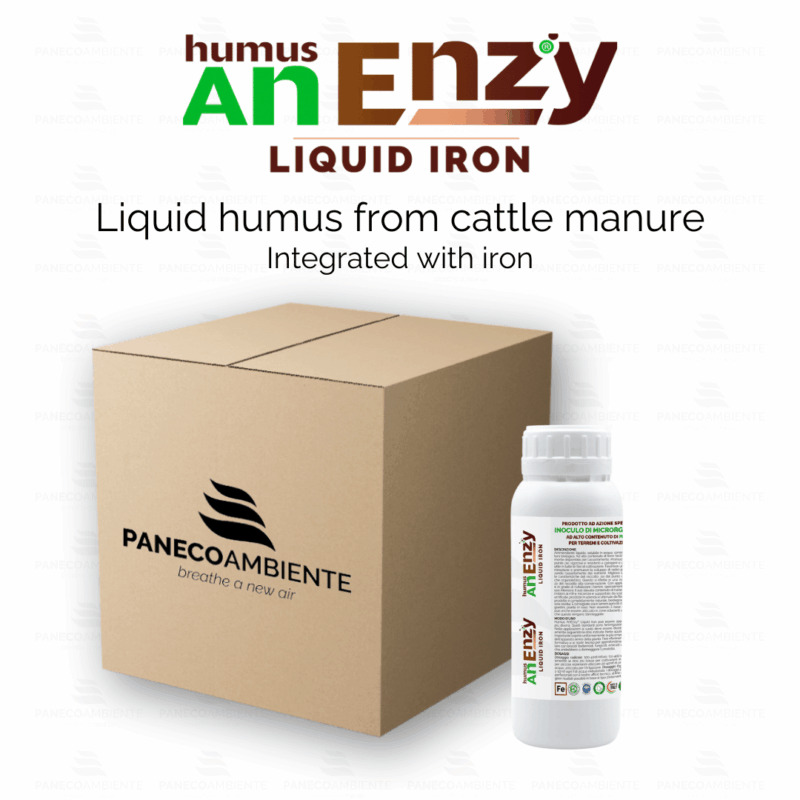


Technical Spotlight: Humus AnEnzy® Liquid
Product Description and Characteristics
Humus AnEnzy® Liquid exemplifies biotechnology applied to soil regeneration. Its formulation includes:
- Humified Organic Matter: Sourced from controlled-feedstock amendments, it improves soil water retention and enzyme activity.
- Mycorrhizal Fungi: Symbiotic microorganisms that boost nutrient uptake,particularly phosphorus,via root associations.
- Rhizosphere Bacteria: At 3 × 10⁶ CFU/g, these strains are selected to enhance root growth and organic matter mineralization.
- Enzymes: Catalysts that accelerate key soil biochemical processes.
Fully natural and biodegradable, Humus AnEnzy® Liquid is registered in the Fertilizer Registry and meets organic agriculture standards. It is especially suited for:
- Fruit and Vine Crops: Promotes stronger, more nutrient-efficient root systems, leading to higher-quality yields.
- Vegetable and Ornamental Crops: Microbial support enhances disease resistance and stress tolerance, improving both aesthetics and yield.
- Soilless and Integrated Systems: Water-soluble formulation makes it easy to incorporate into fertigation or substrate-activation protocols.
Application Guidelines
Humus AnEnzy® Liquid should be applied according to precise technical protocols:
- Foliar Spraying and Fertigation: Uniform distribution,achieved by thorough agitation,ensures even coverage of both aerial and root systems.
- Variable Dosages: Tailored to crop type and soil conditions; technical support helps define optimal rates to avoid over-application.
- Synergy with Other Amendments: Compatible with vermicompost, pellets, and granular fertilizers to maximize decomposition and enzyme activation.
Operational Benefits and Advantages
Using Humus AnEnzy® Liquid delivers multiple technical and economic gains:
- Strengthened Natural Defenses: Root symbiosis and PGPR activity enhance plant resistance to pathogens.
- Cost Savings: Consistent, calibrated use reduces chemical fertilizer needs, lowering input costs and improving economic sustainability.
- Safety and Versatility: With no synthetic or GMO components, it is safe for sensitive areas,near residences, mushroom farms, or aquaponic systems.
Integrating Liquid Humus into a Technical Soil Management Framework
Rhizosphere Analysis and Monitoring
Optimal management of humus-treated soils requires a robust monitoring system:
- Microbiological Assessments: Periodic CFU counts and inoculant-specific assays (e.g., mycorrhizal colonization, PGPR levels) gauge treatment efficacy.
- Chemical-Physical Tests: Regular pH, cation-exchange capacity (CEC), and nutrient-availability measurements track soil evolution.
- Simulation Models: Predictive software and mathematical models forecast the long-term impact of humus applications on biogeochemical cycles, enabling continuous optimization.
Synergies with Agronomic Technologies
Incorporating liquid humus into precision agriculture leverages advanced tools:
- Automated Irrigation Systems: Controlled fertigation ensures consistent, real-time application in tandem with soil-quality sensors.
- IoT Sensors: Environmental monitors supply live data on moisture, temperature, and nutrient levels, fine-tuning dosage and frequency.
- Integrated Nutrient Management Software: Precision-farming platforms coordinate humus application with other amendments, maximizing system-wide efficiency.
Conclusions: An Innovative Approach to Soil Regeneration
Adopting liquid humus marks a turning point in agronomic management, merging biotechnology, soil chemistry, and applied agronomy to:
- Enhance soil physical structure
- Increase nutrient availability via mineralization and solubilization
- Stimulate root growth and strengthen plant–soil symbiosis
- Promote biodegradation and natural nutrient recycling
General Conclusion
Overall, liquid humus is a high-impact technological and biological tool for restoring soil health. Humus AnEnzy® Liquid,blending humic extracts, mycorrhizal fungi, and rhizosphere bacteria,demonstrates the potential of this technology. Compliant with organic standards and optimized for fertigation and spraying, it enables integrated productivity and sustainability gains. Investing in liquid humus means investing in soil regeneration, biodiversity enhancement, and an agronomic future where technology and nature collaborate to deliver healthier, more resilient, and more productive crops.
Investing in liquid humus means investing in soil regeneration, biodiversity enhancement, and an agronomic future where technology and nature collaborate to deliver healthier, more resilient, and more productive crops.


